 Prep
Why focus while studying is hard
If you are trying to work out how to focus while studying, you are probably fighting two things: interruptions (notifications, messages, the urge to check) and fatigue (attention fading over a long session). The research on each is more modest and more mixed than productivity blogs suggest, so this guide reports what was actually found, including the parts that did not replicate.
One reassuring point first: you do not need perfect focus to learn well. How you spend your study time, for example testing yourself rather than rereading, matters a great deal; see our guide to studying effectively. Focus strategies make that time more efficient.
| Strategy | What the research found | Verdict |
|---|---|---|
| Phone out of the room | Original study: mere presence reduced available capacity (Ward et al., 2017). Meta-analysis: only working memory affected, modestly (Parry, 2023) | Do it: small effect, zero cost, and removes interruptions |
| Pomodoro (fixed breaks) | Similar output in less time and better mood than self-regulated breaks in one study (Biwer et al., 2023); no overall differences in two others (Smits et al., 2025; Göksu et al., 2026) | Optional: try it, keep it if it works for you |
| Quiet rest in breaks | Brief quiet rest after learning helps consolidation (Wamsley, 2019) | Do it: replace phone breaks |
| 7+ hours of sleep | Restriction to 3-6.5 h impairs memory formation, g = 0.29 (Crowley et al., 2024) | Do it: protect sleep over late sessions |
| One task per block | Not directly tested in the studies above | Common sense; low cost |
Your phone: the brain drain effect, and why it is smaller than first reported
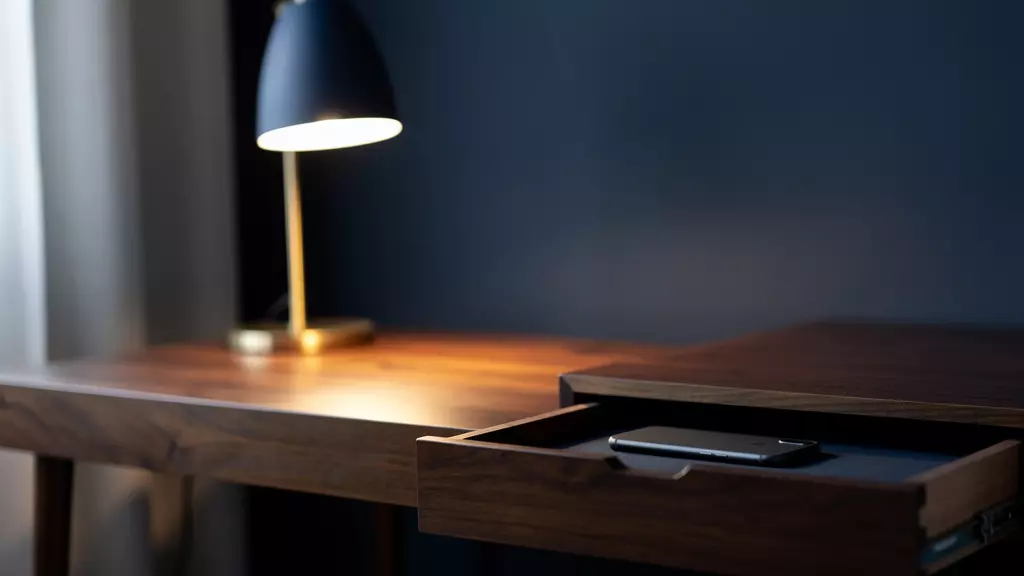
In a widely reported 2017 paper, Ward et al. ran two experiments in which participants' own smartphones were either close by or in another room. The mere presence of the phone reduced available cognitive capacity, even when people were not using it, and the costs were highest for people most dependent on their phones. The idea became known as "brain drain".
Later evidence tempered it. A meta-analysis by Parry (2023) pooled 56 effects from 7,093 participants. Only working memory capacity (how much you can hold and manipulate in mind at once) was significantly affected, and only modestly. Other cognitive functions showed no effect, and the author raised methodological concerns about the literature.
What this means for you: the phone sitting silently on your desk probably costs less than the headlines claimed. But working memory is exactly what you use when you work through a subnetting problem or a multi-step scenario question, and the remedy costs nothing. And none of this research covers the bigger cost: actually picking the phone up. Every notification you answer is a break in the session you did not plan.
So: phone in another room, or at least out of sight, on silent, for the whole block.
If you know you check your phone constantly, this matters more for you, not less. Ward et al. found the costs were highest for the people most dependent on their phones. A practical test: for one week, study with the phone in another room and note how often you feel the urge to fetch it. Counting the urges shows you how often it was competing for your attention when it sat beside you.
Breaks: does the Pomodoro technique help?
The Pomodoro technique uses fixed blocks, classically 25 minutes of work and 5 of rest. It is popular, but tested only recently, and the results so far are mixed.
- In Biwer et al. (2023), 87 Dutch university students studied for a day using either self-regulated breaks or fixed breaks (24 minutes of study and 6 of rest, or 12 and 3). Self-regulating students took longer sessions and longer breaks and reported more fatigue and distraction and lower concentration and motivation. There was no difference in mental effort or in how much they completed, so the fixed-break groups finished similar work in less time.
- In Smits et al. (2025), 94 students compared self-regulated breaks, Pomodoro (25/5) and Flowtime breaks over a two-hour session. Pomodoro led to a faster rise in fatigue, and both structured methods to a faster fall in motivation, but there were no overall differences in fatigue, motivation, productivity, task completion or flow.
- In Göksu et al. (2026), 176 students read a text with either fixed short breaks or self-regulated breaks. There was no significant difference in performance (the authors note the measure may have been limited), and self-regulated breaks led to more positive moods.
Honest summary: no study so far shows that a particular break schedule improves learning outcomes. Planned breaks may make sessions more efficient for some people; self-chosen breaks may feel better for others. What seems to matter is that you take breaks deliberately rather than drifting into them. Pick a structure, try it for a week, and keep it if you get more done.
Use breaks for quiet rest, not scrolling
What you do in the break may matter more than when you take it. A review by Wamsley (2019) describes evidence that brief periods of quiet waking rest after learning help consolidate new memories. Quiet rest means sitting with your eyes closed or looking out of a window, not reading messages.
Practical version: end each block with three to five minutes of doing nothing, then decide whether to start the next block. If your break is a phone break, you have just brought the distraction back.
Sleep: the focus factor people trade away
Concentration problems late in the evening are often just tiredness. Sleep loss also directly weakens memory: a meta-analysis by Crowley et al. (2024) found that restricting sleep to 3 to 6.5 hours, compared with 7 to 11 hours, impairs memory formation (g = 0.29). An effect size g expresses the difference between groups in standard deviations; 0.29 is small but consistent, and it applies to every session you study while short of sleep.
If you only have one hour a day, the hour after a full night's sleep is worth more than the hour cut out of it.
What about music, caffeine and focus apps?
You will find confident advice on all three. We have not reviewed the evidence on them for this guide, so we will not give you a verdict, and you should be cautious with anyone who gives a universal one. Individual differences are likely to be large here.
A better approach is to run your own small test. For two weeks, study in your usual setup; for two weeks, change one thing (silence instead of music, for example). Keep the rest of your routine the same and compare your scores on practice question sets of similar difficulty, not how focused you felt. Feelings of focus and actual learning can diverge, as research on rereading shows: in Seban et al. (2024), students who reread a text grew more confident with each reading and ended up overconfident about what they would remember a day later.
If one change clearly helps your scores, keep it. If nothing changes, pick whatever you can sustain and stop optimising the setup.
A focus setup checklist
- Phone in another room, on silent. If you need it for two-factor login, put it face down across the room and return it after.
- One task per block, written down before you start: "20 CCNA questions on OSPF, then review misses".
- Close every tab and app the task does not need. Turn off desktop notifications.
- Choose your block length in advance: 25, 45 or 50 minutes. Start a timer.
- Start with retrieval. A quick closed-book recall of last session gets you working immediately instead of easing in by rereading.
- Break with quiet rest, three to five minutes, no screen.
- Stop at a planned time, not when you collapse, and not past your bedtime.
How to use this for a certification exam
Exams themselves are long focus tests: 90 minutes for CompTIA exams, up to four hours for PMP. Practise focus under the same conditions.
- Daily blocks: one or two focused blocks with the checklist above, each ending with practice questions.
- Weekly focused test: take one of our free practice tests in a single sitting, phone in another room, no pausing, for example the CCNA practice test or the A+ practice test.
- Notice when attention dropped. Mark questions where you caught yourself rereading the stem. If misses cluster late in a session, build stamina with longer timed sets.
- Final two weeks: at least one full-length timed practice exam at the time of day you will sit the real one.
- Night before: sleep, not cramming; see how to pass an exam.
Related reading: our study schedule template and the evidence on test anxiety.