 Prep
What the testing effect is
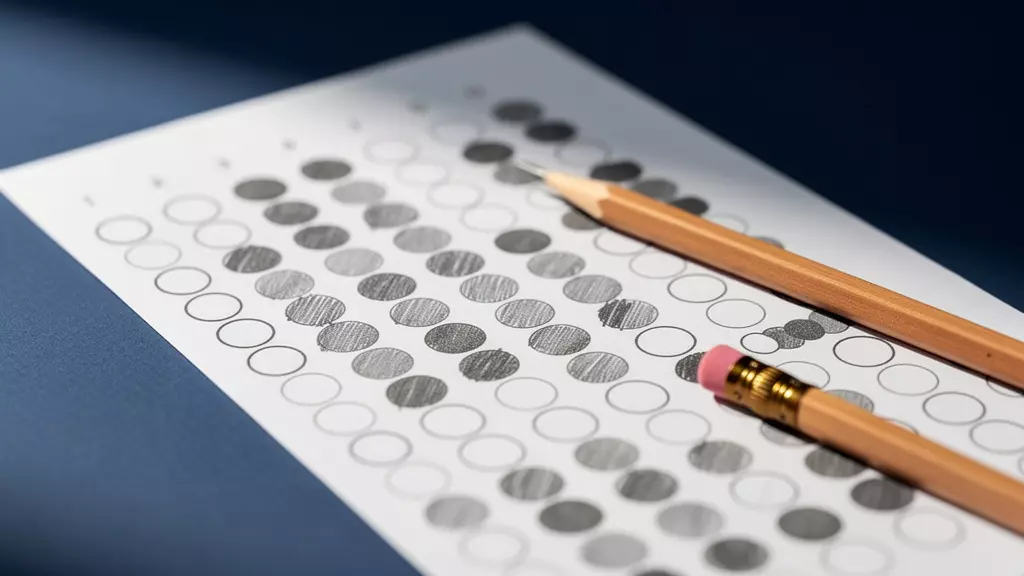
The testing effect is the finding that taking a test does not only measure what you know: it makes you remember it better. Answering a question from memory strengthens that memory more than spending the same time restudying the material. Researchers also call it retrieval practice, and students know the everyday version as active recall.
This matters for exam preparation because most candidates use practice tests only at the end, as a readiness check. The research says practice tests are one of the best ways to learn in the first place.
| Study | What it covered | Key result | What it means for you |
|---|---|---|---|
| Roediger & Karpicke, 2006 | Prose passages; tests vs restudy; final test after 5 min, 2 days or 1 week | Restudy won at 5 min; testing won at 2 days and 1 week | Judge your method by delayed results |
| Karpicke & Roediger, 2008 | Foreign-language vocabulary | Testing after the first correct recall had a large effect; restudying had none | Keep testing items you already got right |
| Rowland, 2014 | Meta-analysis of the testing effect | Recall tests gave larger benefits than recognition tests | Answer before you look at the options |
| Schwieren et al., 2017 | 72 effect sizes from real psychology classes | d = 0.56 in favour of testing | The effect survives real courses |
| Donoghue & Hattie, 2021 | 242 studies of ten techniques | Practice testing d = 0.74 overall | One of the two most effective techniques |
The evidence for the testing effect
The classic experiment
In Roediger & Karpicke, 2006, students read prose passages and then either took free-recall tests (without feedback) or restudied the passages the same number of times. On a test 5 minutes later, restudying did better. On tests 2 days and 1 week later, the students who had been tested retained substantially more. Restudying made students more confident, even though it led to worse delayed performance.
Meta-analyses
Three meta-analyses, which pool many studies, point the same way:
- Adesope et al., 2017 found practice tests more beneficial for learning than restudying and all other comparison conditions, with effects that depended on the features of the practice tests and the studies.
- Rowland, 2014 found that initial recall tests produced larger testing benefits than recognition tests, supporting the idea that effortful retrieval drives the effect.
- Donoghue & Hattie, 2021 compared ten study techniques across 242 studies and placed practice testing among the two most effective, with d = 0.74 overall and d = 0.80 across 278 effects from university students.
An effect size (d) describes how far apart two groups are in standard deviations. By the usual rule of thumb, 0.2 is small, 0.5 moderate and 0.8 large. So d = 0.74 means the average student who practised with tests outperformed roughly three quarters of the comparison group.
In real courses
Lab effects do not always survive real teaching. This one does: a meta-analysis of 72 effect sizes from real psychology classes found d = 0.56 in favour of testing (Schwieren et al., 2017), a moderate effect.
Why retrieval strengthens memory
The mechanism is still debated. Rowland (2014) found support for effortful processing as a contributor: the harder the initial retrieval, as in recall compared with recognition, the larger the later benefit. The same meta-analysis found only limited support for the idea that tests work mainly by making people elaborate on meaning, and suggested that other explanations, such as the context in which a memory is retrieved, deserve more attention.
For a learner, the practical upshot is simple even if the theory is not. A question you answer easily does little. A question you struggle with, retrieve, and then check does a lot. That is why a practice test score of 60% early in your preparation is not bad news: the struggle is where the learning happens.
One more caution on depth. Across all ten techniques they studied, Donoghue and Hattie report much larger effects on surface outcomes (d = 0.60) than on deep processing (d = 0.26). Testing builds knowledge you can recall well; building judgement for complex scenarios also takes explanation and worked examples.
Practice test benefits: what they actually do for you
Practice tests help in two separate ways, and you want both.
Direct benefits: the test itself builds memory
- Better long-term retention than restudying (Roediger & Butler, 2011).
- More flexible knowledge. The same review notes that retrieval practice promotes transfer: using knowledge in new situations, which is what scenario questions demand.
- It works even without feedback, but feedback enhances it. Always read the explanation.
Indirect benefits: the test tells you where you stand
- It finds your gaps. A domain score is a map of what to study next.
- It corrects your confidence. In Karpicke & Roediger, 2008, students' predictions of their own performance were uncorrelated with how they actually did. Your feeling of readiness is not reliable; a score is better. See metacognition for how to judge your own learning.
- It builds familiarity with the format: reading long stems, eliminating distractors, pacing.
How many practice tests before an exam?
No study gives a magic number of practice tests for a certification exam, and you should be sceptical of anyone who claims one. What the research does tell you is how to use them:
- Keep testing after you get it right. In Karpicke & Roediger, 2008, once students had recalled a word correctly, further studying had no effect on delayed recall, but further testing had a large positive effect.
- Spread tests out. In a classroom study, more practice improved retention within the semester, but retention four weeks later, across semesters, improved only with more spacing (Lyle et al., 2020). Ten tests in the last weekend help less than ten tests spread over six weeks.
- Prefer effortful formats. Since recall tests beat recognition tests (Rowland, 2014), try to answer before looking at the options.
Our recommendation, based on that evidence rather than a study of certification candidates: test every exam objective in at least three separate sessions on different days, answering correctly each time, and take two or three full-length timed mock exams in the final two to three weeks. In practice, that usually means several hundred practice questions over a typical preparation period, not one or two mock exams.
When practice tests mislead
- Memorised question banks. If you have seen a question three times, your score measures recognition of that question, not mastery of the topic. Fresh questions or recall-before-options keeps the score honest.
- Mismatched difficulty. Practice sets that are much easier or narrower than the real exam inflate confidence. Check coverage against the official exam objectives.
- Reading scores without reviewing. The explanation step is where wrong answers get corrected. Skip it and you may reinforce errors.
- Surface-only questions. Donoghue and Hattie note most studies measured surface or factual outcomes. Mix in scenario questions that require applying concepts, not only recalling definitions.
Practice tests also work best when combined with spaced repetition and interleaving: spread your tests over time and mix question topics.
Making the testing effect part of daily study
The simplest change: start every study session with a test instead of ending with one. Answer 10 questions on what you studied two or three days ago, check the explanations, and only then move to new material. This builds retrieval and spacing into the routine without any extra planning.
Second change: when you finish a chapter or video, do not reread it. Close it, write down what you remember, and answer a few questions on it. If you cannot, that is useful information, not failure. Effortful retrieval is a desirable difficulty: it feels worse than rereading and works better.
Third change: keep a log of every question you miss, with one line on why the right answer is right. Retest those items one to two days later. Over a few weeks, the log becomes your most valuable revision document, because it contains exactly the things you did not know.
How to use this for a certification exam
A six-week protocol for a multiple-choice exam such as the PMP, CompTIA Security+ or AWS Cloud Practitioner:
- Day 1: diagnostic. Take our free PMP practice test or the AWS practice test for your exam, without studying first. Record your score per domain.
- Weeks 1 to 4: test-first sessions. Each study day, open with 10 to 15 questions on material from 2 to 7 days ago, then study new material, then close with 5 questions on today's topic. That is roughly 100 questions per week.
- Error log. Every miss goes into the log with the reason. Retest log items after 1 day and again after 1 week.
- Every Sunday: a mixed set of 30 to 40 questions across all domains, timed at roughly the real exam pace.
- Weeks 5 and 6: full-length mocks. Two or three timed, full-length practice exams, at least three days apart. Spend as long reviewing each mock as taking it.
- Readiness check. Retake our free practice test. If one domain is clearly below the others, give it the next three study sessions before booking or sitting the exam.
The full plan, including what to do in the last 48 hours, is in how to study for exams.